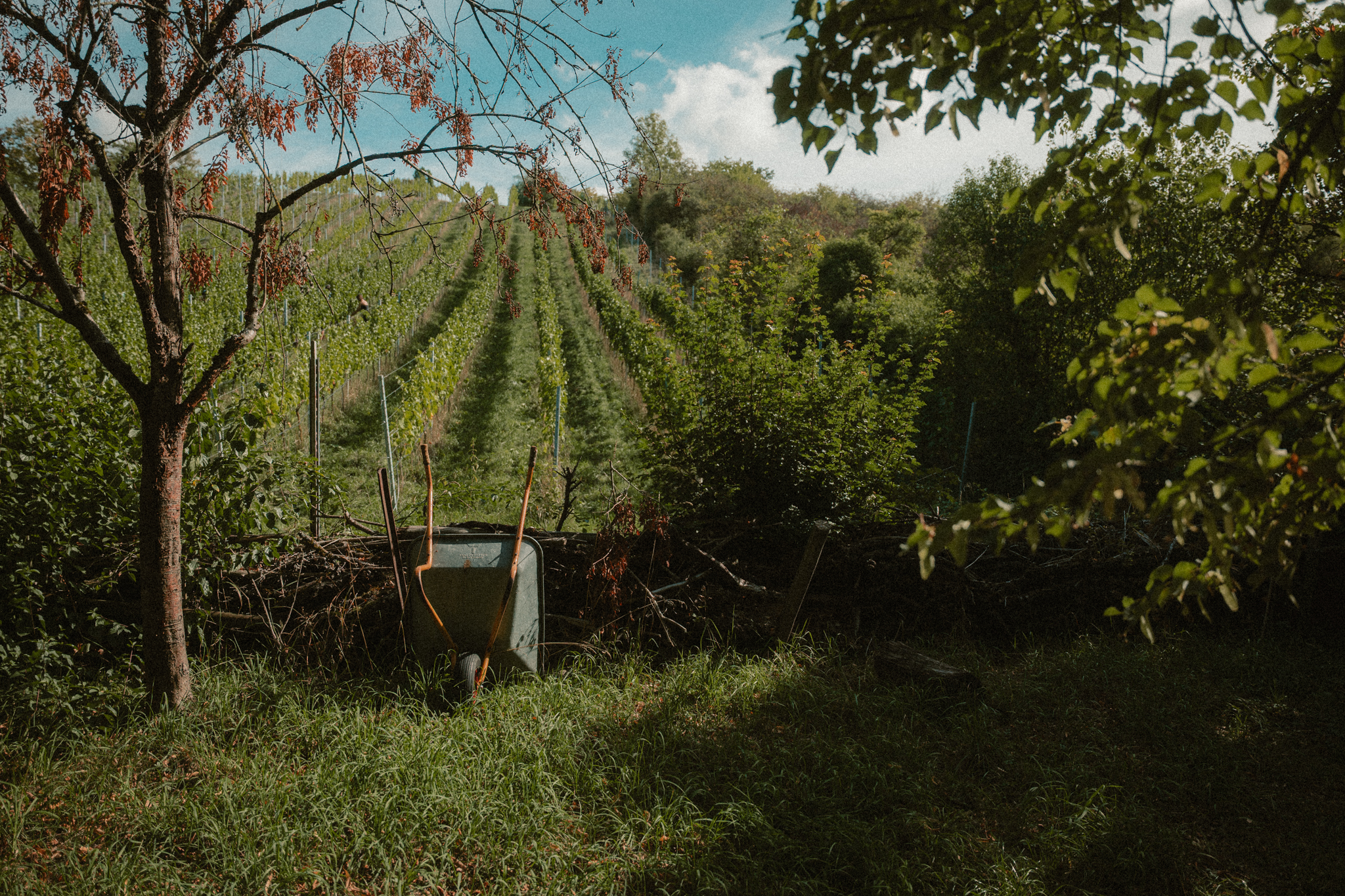
Vineyard & Cellar
From the vineyard to the cellar and back again
From the vineyard to the cellar, countless microorganisms are part of a wine's story: in the soil, on the grapes, in the juice and finally in the wine. We're part of that story too. We're just not the only ones writing it.
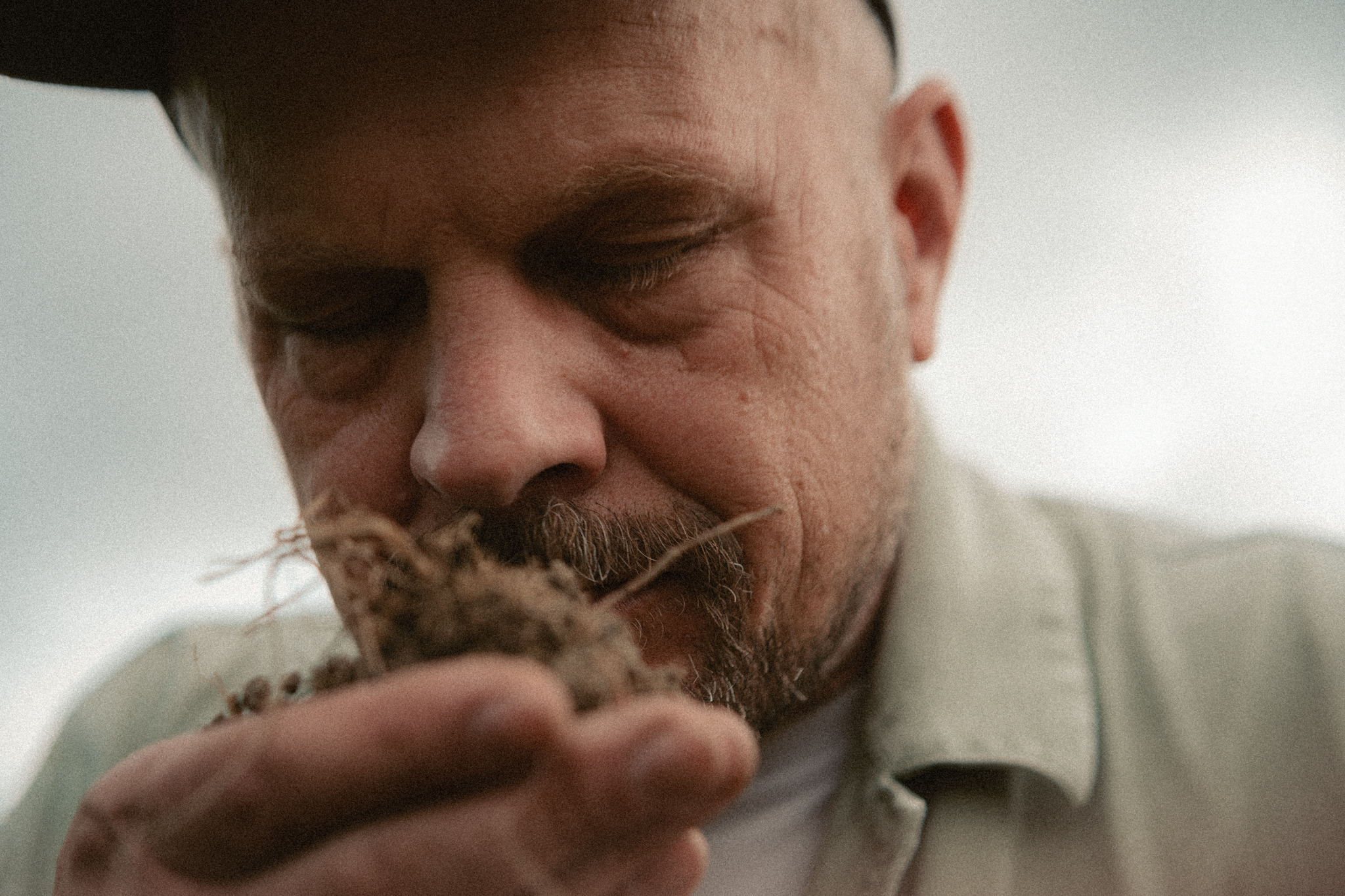
Soil as a living structure
Our Pinot Meunier grows in the middle of town among gardens, and at dusk at least fifteen species of bat come out to hunt. When we found out, we started collecting their guano for the compost. It's not the most important thing we do in the vineyard. But it says a fair bit about how we think about soil.
All our vineyards are certified organic. That's the baseline. What interests us is what goes beyond it. For a long time we understood soil through numbers: pH, humus, nutrients. Today we're more interested in how it all works together, plants, fungi, microbes, water, rock and us. So not every parcel gets the same treatment. Fine compost where the soil lacks balance, compost tea where we want to give the life in it a push. As little tillage as possible, and a mixed cover crop so that something is growing between the rows all year. The first trees among the vines. And homemade teas, ferments and whey, so we can keep the copper and sulfur we use against mildew as low as possible.
None of this is a fixed programme. A dry summer wants something different from a wet spring, and what helps on one slope often means little to the next. We care less about which method is right in principle than about what a parcel needs right now. Staying small helps. We can treat parcels differently, pick them separately and make their wines one by one at first.
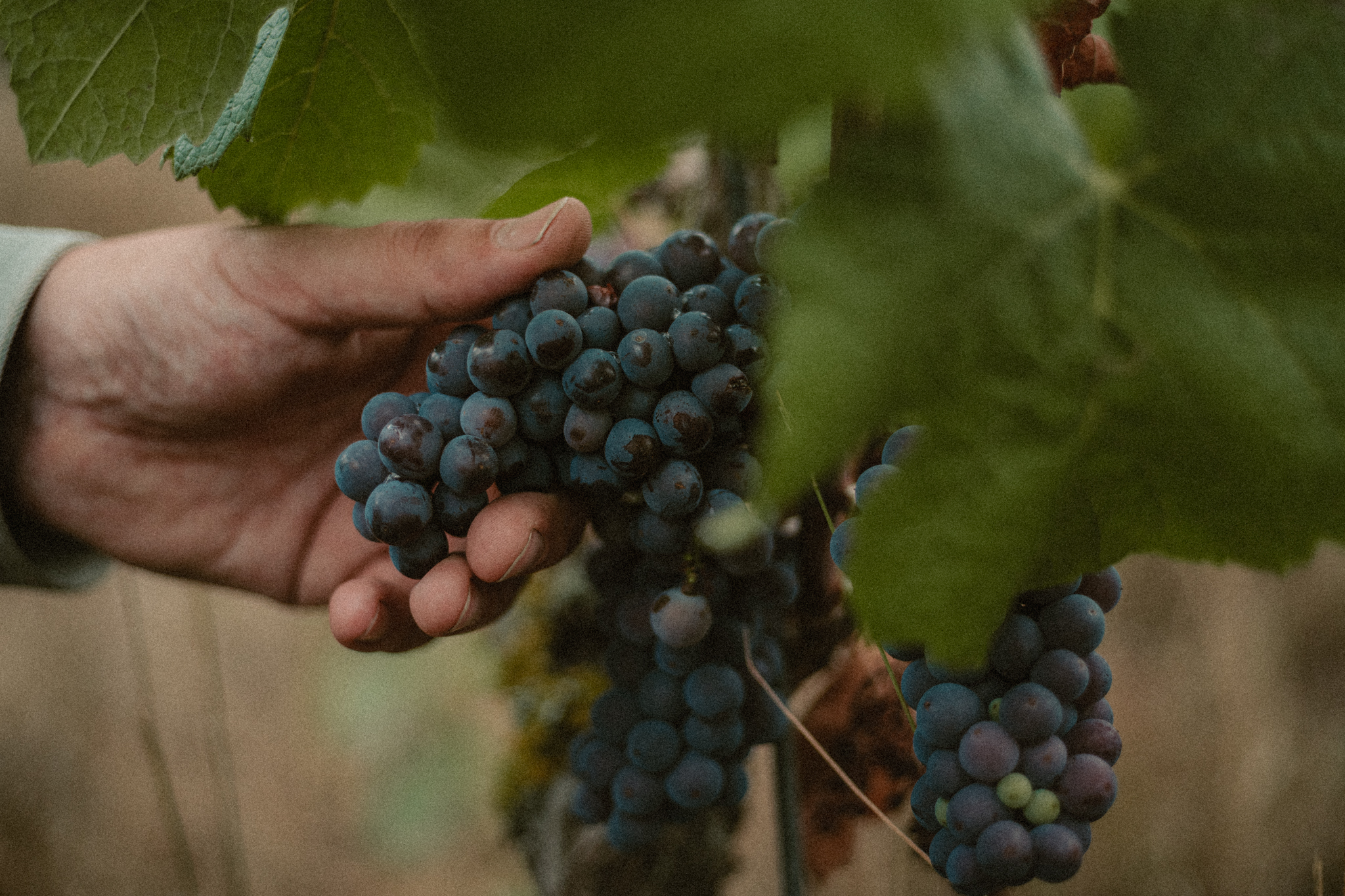
Farming is composing
Climate, soil, variety, yield and the way a year unfolds write the score. Once the grapes are ripening, the symphony is written and waiting to be performed. Well or badly, but it can't be rewritten.
The performance starts with the harvest, by hand, and not every vineyard is ready on the same day. We decide when to pick, whole bunches or destemmed, pressed straight away or days on the skins. Our reds ferment on their skins, and so do many of our whites. A lot is settled before fermentation properly gets going. After that it's less about producing a flavour designed in advance than about staying awake to what's emerging.
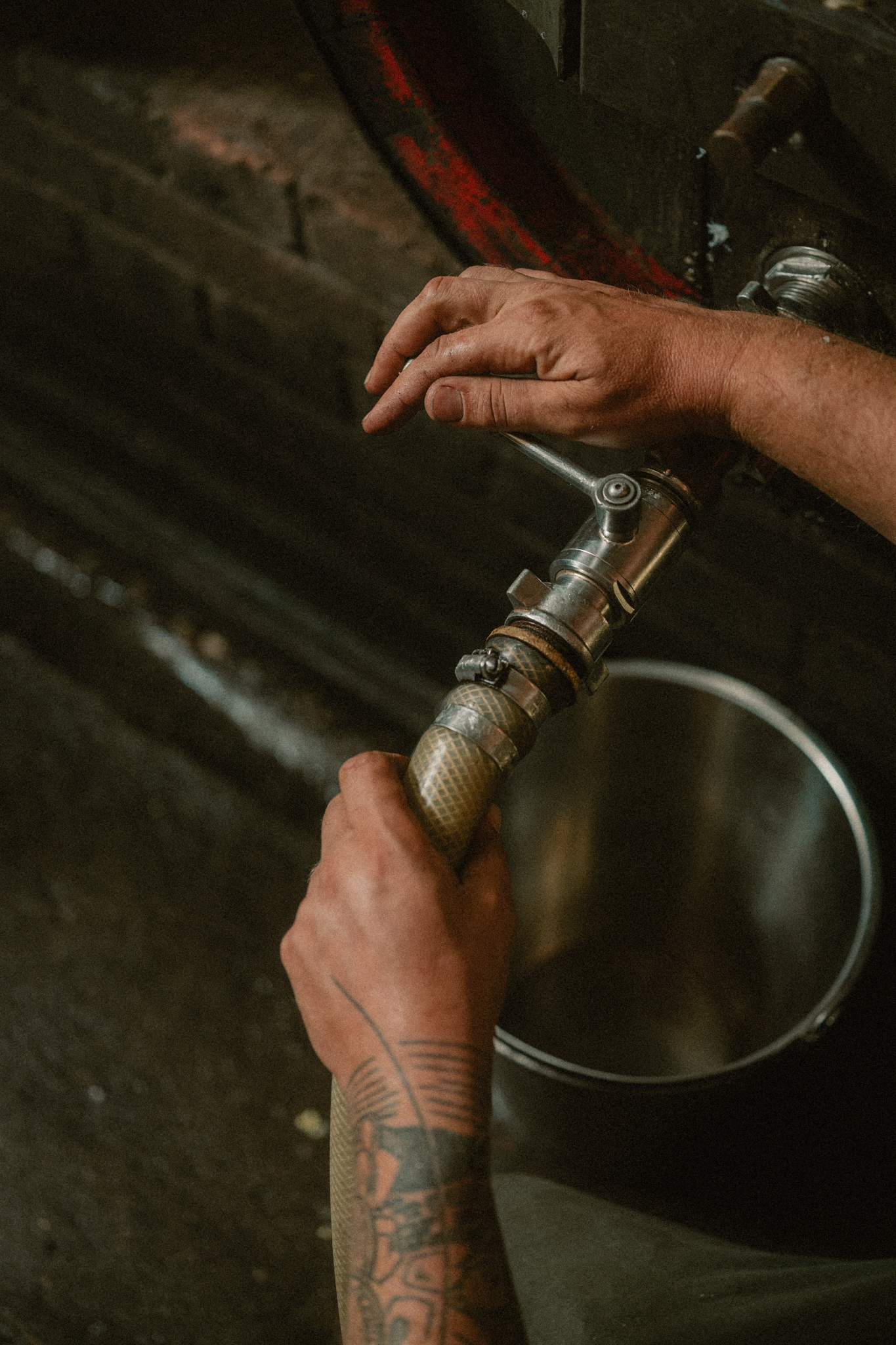
In the cellar
Our wines ferment spontaneously, with the yeasts that ride in on the grapes and the ones that have lived in the cellar for ages. No cultured yeasts, no enzymes, no fining agents, no other additives, no filter, no sulfur.
That doesn't mean we sit around down there. We decide how long the skins stay in, when to press, whether the must gets to settle before fermentation, and which barrel suits which wine. Why so much wood? Because it lets through a breath of oxygen and gives a wine time to sort itself out. Many wines only move into steel at the end, before bottling.
Because we hardly correct anything later, we get very direct feedback on everything we did before. Take Weinschwärmer: Pinot Gris and Riesling grow side by side on the same Muschelkalk hill. They're picked on different days, fermented separately and kept in their own barrels until the following summer. Only then do we decide how they come together. Or Heimat and Zweite Heimat, both skin-fermented Silvaner, one from Muschelkalk near the yard, the other from Keuper three hundred metres up. Tasted side by side, they show what the ground does when the cellar does almost the same thing.
Knowing when to act and when a wine simply needs time is the real craft.
Time
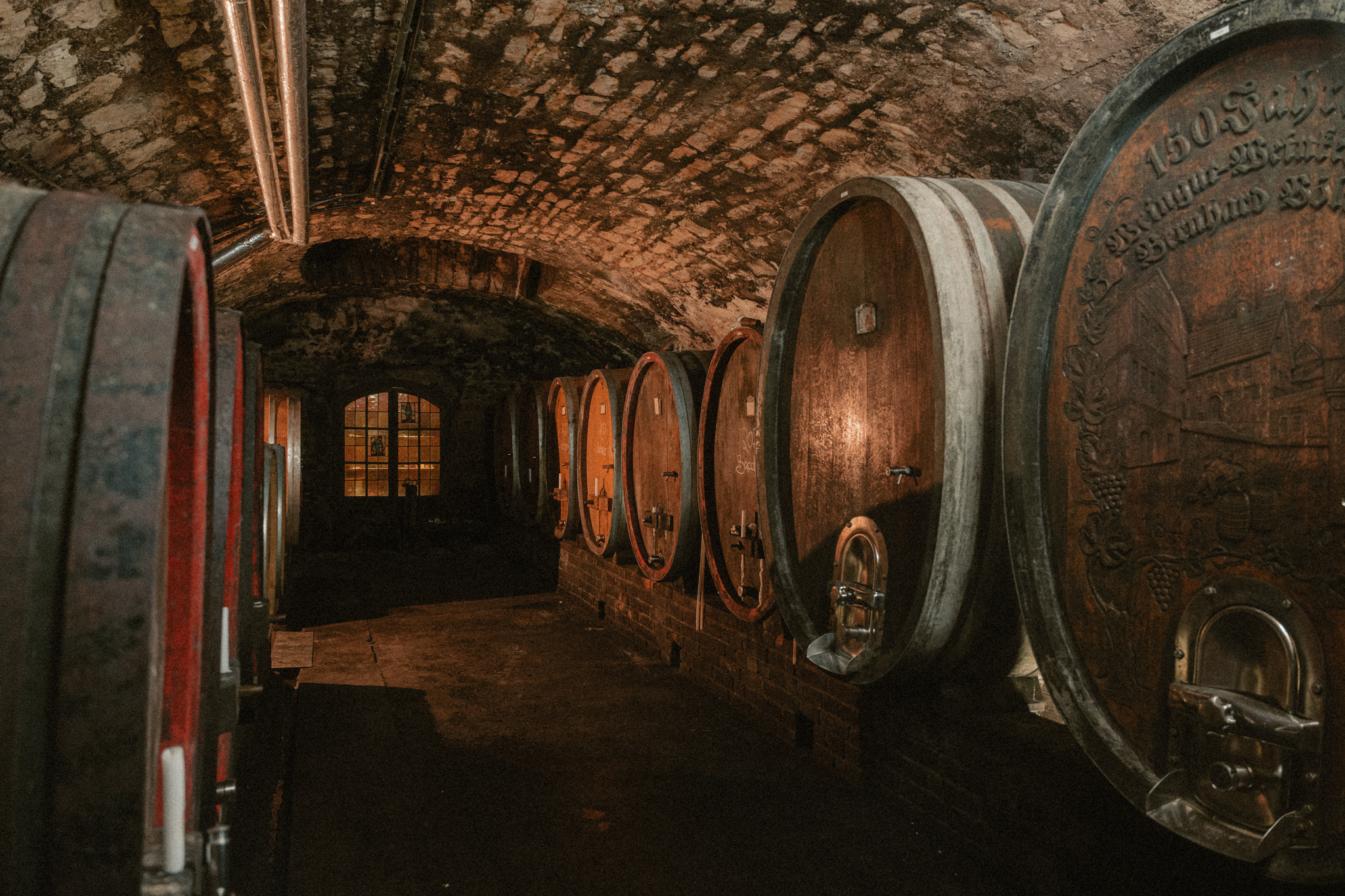
Our wines spend at least a year in our late nineteenth-century cellar, many considerably longer. The thick Muschelkalk walls keep the temperature remarkably steady through the year, and most of the wines mature in wood.
Time here isn't a waiting room. A wine keeps changing. What's loud at first grows quieter, other things only surface after months, and some wines find their shape quickly while others take their time. So there's no fixed timetable.
We taste the barrels again and again, and every time we end up back outside. What was that summer like? What did we do in that parcel? What worked, and what do we drop next year? We take the answers with us into the vineyard when we prune in winter.