What words do to wine
Rilke feared that our words take the life out of things. Anyone who has tried to describe a wine knows the suspicion he meant.
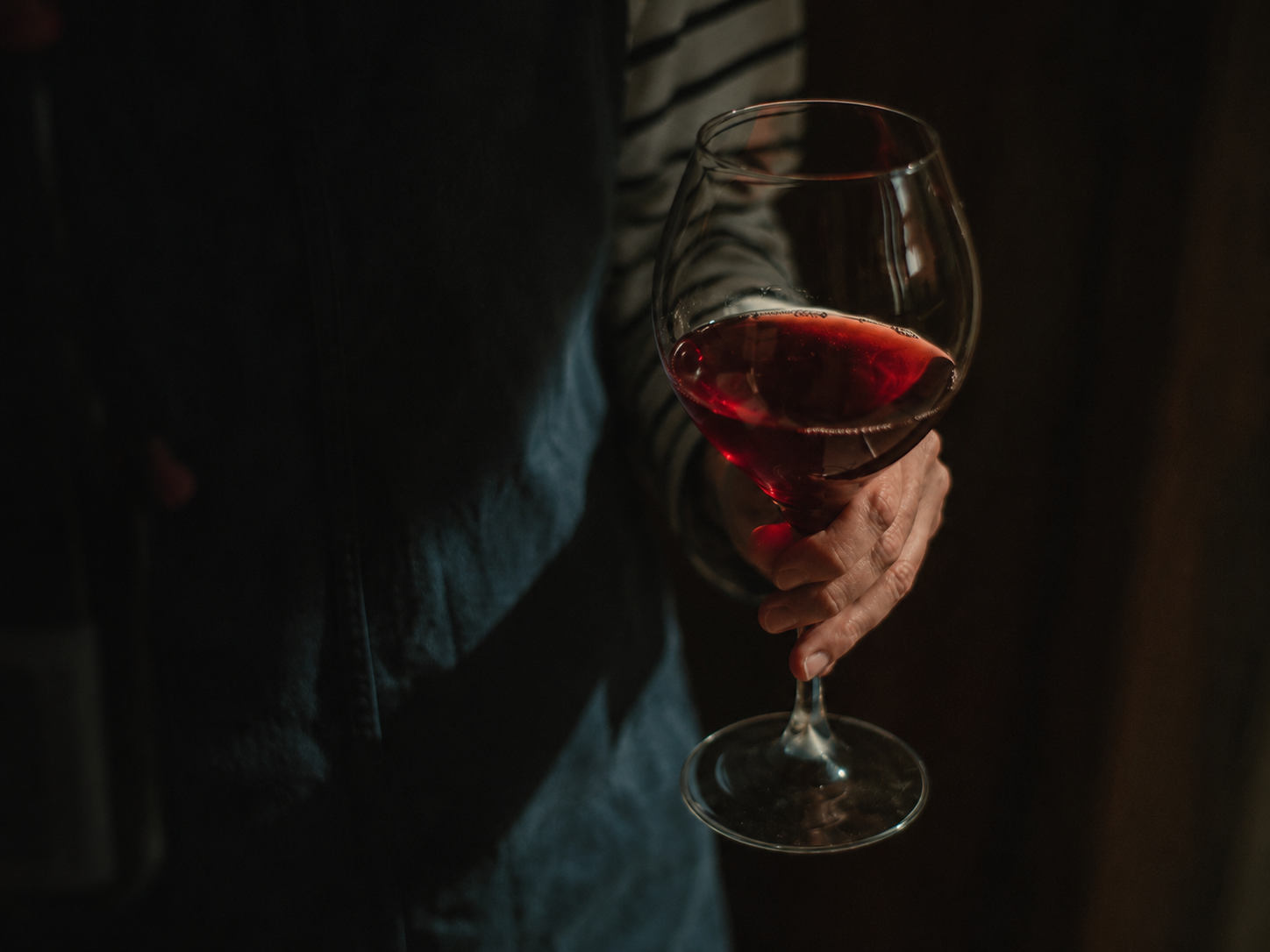
There are two types worth avoiding at a wine tasting. One has twenty adjectives ready for every sip, polished enough to print, as if reading off a card. The other goes quiet and reverent, swirls the glass, and looks at you as though you’d just talked during a church service. Both suffer from the same problem. They just show different symptoms.
I once worked for a science magazine. There you learn to cut every sentence down until it says only what can be backed up — a useful habit that has stuck with me, even if it doesn’t make for great company at dinner parties. Acidity, fruit, structure, maybe some reduction: with this vocabulary, I could correctly describe every wine I’ve ever met. What’s usually missing is the thing that actually mattered.
Rilke dedicated a poem to this suspicion, written in 1897 and published two years later:
I fear so deeply the words of mankind.
They utter them all with so certain a sound:
and this we call house and that we call hound,
and here is before, and there is behind.
I fear too their thinking, their mocking disdain.
They know the whole past, all things that will be.
For them, no mountain is wondrous to see;
their properties border on God’s own domain.
Pay heed to my warning: now make your retreat.
The singing of things, not words, is what’s sweet.
Your words make things mute, so rigid and gray,
killing them, draining their beauty away.
What bothers him isn’t speech itself. It’s the ease with which we assume that naming a thing settles the matter.
A Wine Called Mineral
At a tasting, one word is often enough to prove his point. Someone at the table says “mineral” — a word no one has ever quite managed to define in thirty years, it just sounds like someone has — and from then on the whole room smells minerality, in a wine that a moment ago smelled only of itself. No one lied. But the first word set the direction, and every other possibility has a harder time of it from there.
I recognize this reflex too well from my own former work to blame it on wine critics alone. An editor who files a piece under the wrong heading too early keeps reading only to confirm the heading. In wine, the word might be “reductive” instead of “needs another edit” — the mechanism is the same: the description arrives before the experience and decides what survives of it.
The Things Sing
Still, it would be convenient to side entirely with Rilke here. Anyone who treats every description as a small betrayal is letting themselves off easy — and ends up as the second type from before, the one gone quiet over the glass: a pose that thinks itself deeper than the first, but says just as little about the wine.
When I studied philosophy in Erlangen, I sat across from a discipline Rilke would probably have had no patience for. Wilhelm Kamlah and Paul Lorenzen had set out to clarify language to the point where people stop misunderstanding each other’s terms. Their book together was called Logische Propädeutik, with the distinctly unseductive subtitle A Primer in Reasonable Speech. Naming, distinguishing, drilling concepts: exactly the activities Rilke recoils from with such certainty. But Kamlah and Lorenzen weren’t trying to settle things with these terms. They wanted to make understanding possible — an exchange in which every claim can be contradicted. Someone who calls a wine mineral should be able to say what they mean by it, and be willing to hear that the person next to them tastes something else entirely. The problem isn’t the word mineral. The problem starts when no one objects anymore, because everyone’s too busy nodding reverently.
The cellar still needs language, though, and the precise kind, not the hushed kind. When a barrel needs three more weeks, or the reduction in a tank keeps shifting for months, meaningful silence doesn’t help — we’ve tried that, it didn’t get the wine done any faster. What helps is naming exactly what you smell, and making a call: bottle it, wait, or don’t bottle this one the way it is.
A description can settle a matter, or it can open a conversation about it. The difference isn’t in the words. It’s in what we do with them afterward.
The Last Word
Rilke’s poem ends with things dying at the hand of the word. I won’t go that far. But I know the feeling of a wine seeming a little poorer after twenty minutes of tasting-room talk — not in the glass, but in how everyone at the table now perceives it.
Sometimes it’s worth lifting the glass again and starting over. Without saying anything, just yet.