What the Blend Swallows
Most of our parcels will never become a wine of their own. We still want to know what each one delivered.
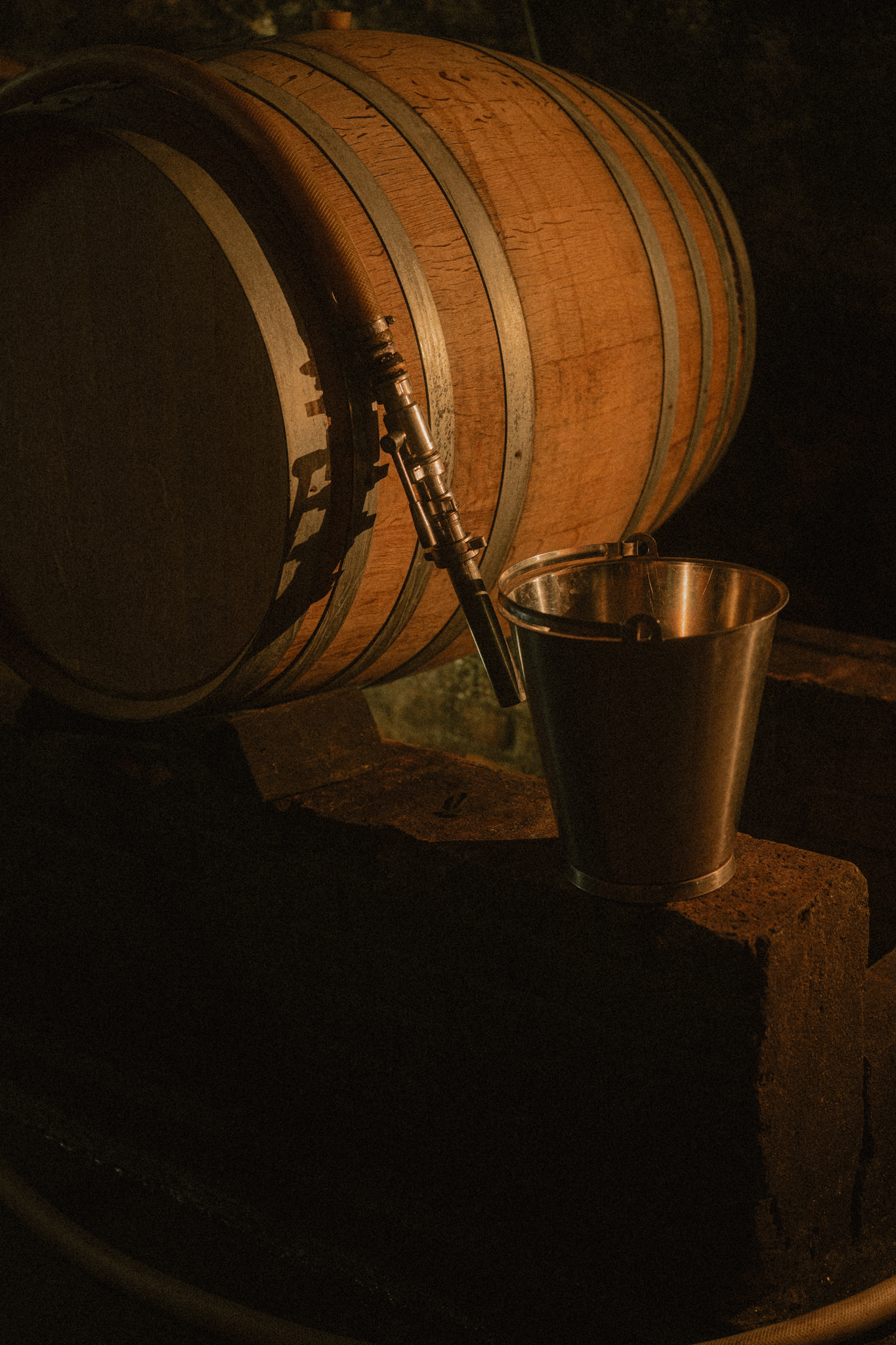
There are more lots in our cellar than there will ever be wines on the list. It’s a hassle. Small volumes need their own barrels or tanks, they have to be tasted, pumped and looked after one by one, and anyone who has had to squeeze one more barrel in somewhere in the middle of harvest understands at once why other estates blend more freely. We hold off as long as we can anyway. New parcels especially I keep separate at first, to get a feel for how the juice of those particular grapes actually behaves.
We don’t believe every small parcel should one day carry its own name on a label. Most never will. But without separate lots we would lose the best chance we have to learn something about our own work. The wine tells us what happened in the vineyard. If we let it.
Farming Without a Control Group
Viticulture makes a poor laboratory. In an experiment you hold as many conditions constant as you can and change a single variable. In a vineyard, roughly the opposite happens. We change the cover crop, and the next summer is drier. We spread compost, and the vines bear less that year. We work the soil differently, and spring brings twice the usual rain. The vines are a year older, the microorganisms have shifted, the harvest falls on a different day. A proper control group practically never exists.
You can still learn, it just takes longer and calls for more caution. When we watch the same parcels over the years and first make their wines separately, repetitions emerge. Never identical ones, but enough to see patterns. One vineyard regularly reacts differently from its neighbor. One parcel shrugs off drought, another gets stressed sooner. Sometimes the wine in the cellar confirms something we noticed in summer. Sometimes it contradicts it. Both help.
Just Not Blindly
Once two lots lie together, their stories can no longer be pulled apart. That’s no argument against blending. Two wines can give each other what neither has alone: one brings tension, the other calm, one barrel opens a wine up, another gives it structure. We like to blend. Just not blindly.
In 2016 the stems of our Heimat Silvaner were so green that we dried them first. A strange experiment with an open outcome. Today the wine has soft tannins and a balanced phenolic structure, and it has aged remarkably well. We can trace that back to the stems only because the lot never disappeared into a blend. Otherwise we would only know that something had worked.
So we separate our decisions in time: first understand what the parcels produced, then decide what should become of them. It sounds like admin and works like a lab notebook, one that tells you years later what you actually did back then.
Not Every Difference Is Terroir
It’s easy to read too much into things. When two wines taste different, the soil isn’t necessarily the reason. The grapes were picked on different days, one barrel was different, one fermentation ran warmer, one lot spent longer on the skins. Terroir is the universal answer to everything you can’t explain. (A very convenient word when you’re out of ideas.)
We’re interested in the opposite: holding off on explanations for as long as we can. We document, taste side by side, and watch over several vintages which qualities return and which vanish. Some seemingly clear observation survives exactly one vintage. Another keeps coming back with surprising reliability. From there it gets interesting.
Being small helps. We can treat one parcel differently from the next and follow its wine on its own. With twenty times the acreage, that would hardly be possible.
And the Weinschwärmer?
We don’t keep everything apart either. On the Weinschwärmer, Pinot Gris and Riesling grow on the same hill. The Pinot Gris ferments on the skins, the Riesling starts on its own, and once it is under way it tops up the Pinot Gris barrel. From then on both ferment to dryness together. They stay separate for the first few days only, because a barrel has to be full.
For the others, we won’t know until next summer what becomes of them. Some take longer.