What Does Spontaneous Fermentation Actually Mean?
Spontaneous fermentation sounds like waiting around with a cup of tea. In truth you only postpone the decision, and look harder every day in exchange.
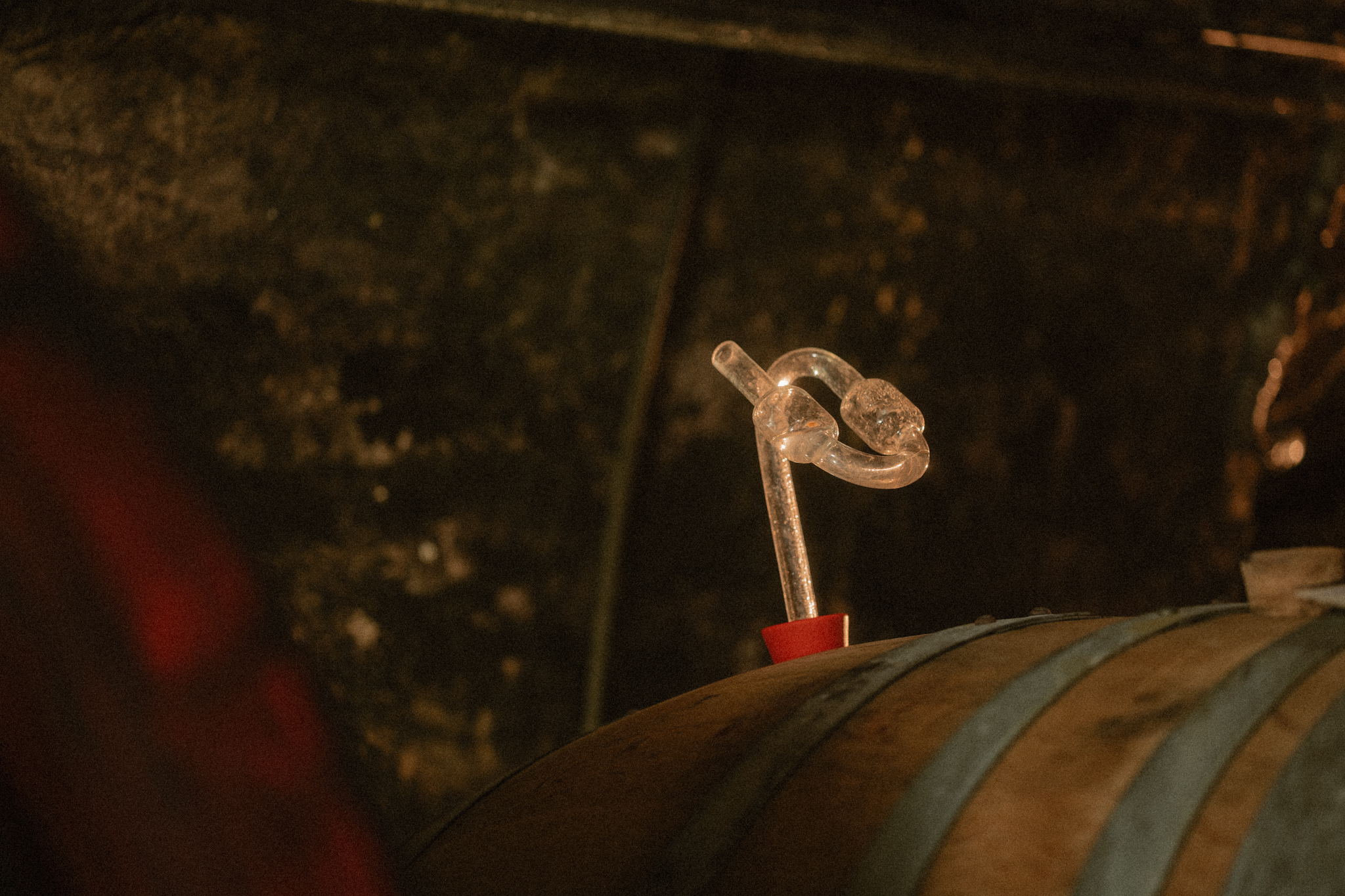
“Spontaneously fermented” has become part of natural wine’s basic vocabulary, and it sounds like a holiday: grapes into the cellar, nobody adds yeast, fermentation starts by itself, and the rest is tea. That isn’t false. It just leaves out almost everything interesting.
Take this: the wild yeast that ends up making the wine is often the same species you’d find in the packet, Saccharomyces cerevisiae. The beginning looks different. Every grape arrives with a microbial community, on berries, stems and leaves, plus dust, insects, tools, and the microorganisms that have lived in the cellar far longer than the grapes. Once the grapes are crushed, that ecosystem tips over at once and numerous yeast genera join in. Many of them disappear again as alcohol and carbon dioxide rise.
So the difference doesn’t run between nature on one side and artificial yeast on the other. It lies in the selection.
Not Choosing Is Also a Choice
With a cultured yeast, the lead role is cast before fermentation begins. The strain was selected, multiplied and dried because it reliably brings fermentation security, alcohol tolerance, a certain temperature behavior or a wanted aromatic effect. It’s rather like a publisher picking the author before there is a manuscript: the book will certainly get finished, and you know roughly how it will sound.
That can make a lot of sense, and anyone who wants a similar result every year is being perfectly reasonable. We decide against it anyway.
The microorganisms from our vineyards aren’t morally superior, and a spontaneous fermentation doesn’t automatically express the taste of a place. Some of the yeasts come in with the grapes, others live in the cellar, in barrels, pumps, hoses and on surfaces. Every cellar writes its own microbial history over the years.
For us, “spontaneous” therefore means something quite sober: we don’t inoculate the must with a chosen yeast culture. That leaves one decision open before fermentation starts and hands part of the selection over to the conditions that actually prevail in this must and in this cellar. The result gets less predictable, and that is exactly what interests us about it.
Spontaneous Doesn’t Mean Unattended
This year, some of the fermentations are so sluggish that we expect a few musts to still be fermenting at Christmas. That’s why we didn’t start a Pet-Nat at all, out of concern that with fermentations this slow it wouldn’t ferment through cleanly. Whoever inoculates a must with a robust cultured yeast gives the chosen population a considerable head start. Whoever doesn’t gets what the must gives and has to be able to react: How quickly does fermentation begin? How does it smell? How does the temperature develop, how fast does the sugar drop? Is there volatile acidity, unusual reduction, anything that doesn’t fit the picture?
Our wines get no yeast nutrients or other fermentation aids, so healthy grapes and clean work matter all the more. Spontaneous fermentation doesn’t mean keeping the cellar grubby so that as many microorganisms as possible feel at home. A barrel in which unwanted organisms have settled for good doesn’t become more interesting because they moved in spontaneously. (Anyone who has ever taken a hose apart knows what we mean.)
If you don’t select, you can still discriminate.
Can You Taste Spontaneous Fermentation?
We hear this question surprisingly often. A simple answer would be handy and, sadly, wrong: there is no such thing as a “spontaneous” taste. A spontaneous fermentation can produce a clear, precise wine or a wild one that’s hard to tame. What interests us, then, is less a particular flavor profile than something else: that the profile of a wine hasn’t been narrowed in advance by a single yeast strain. Technically that’s a small step, but as a decision it’s a big one.
Sometimes we like the answer right away. Sometimes it takes patience. This year we would have wished for a quicker one.