The Mouse Passes
Mousiness is usually a phase in a wine's life. Not a pretty one, but one that passes if you give it time.
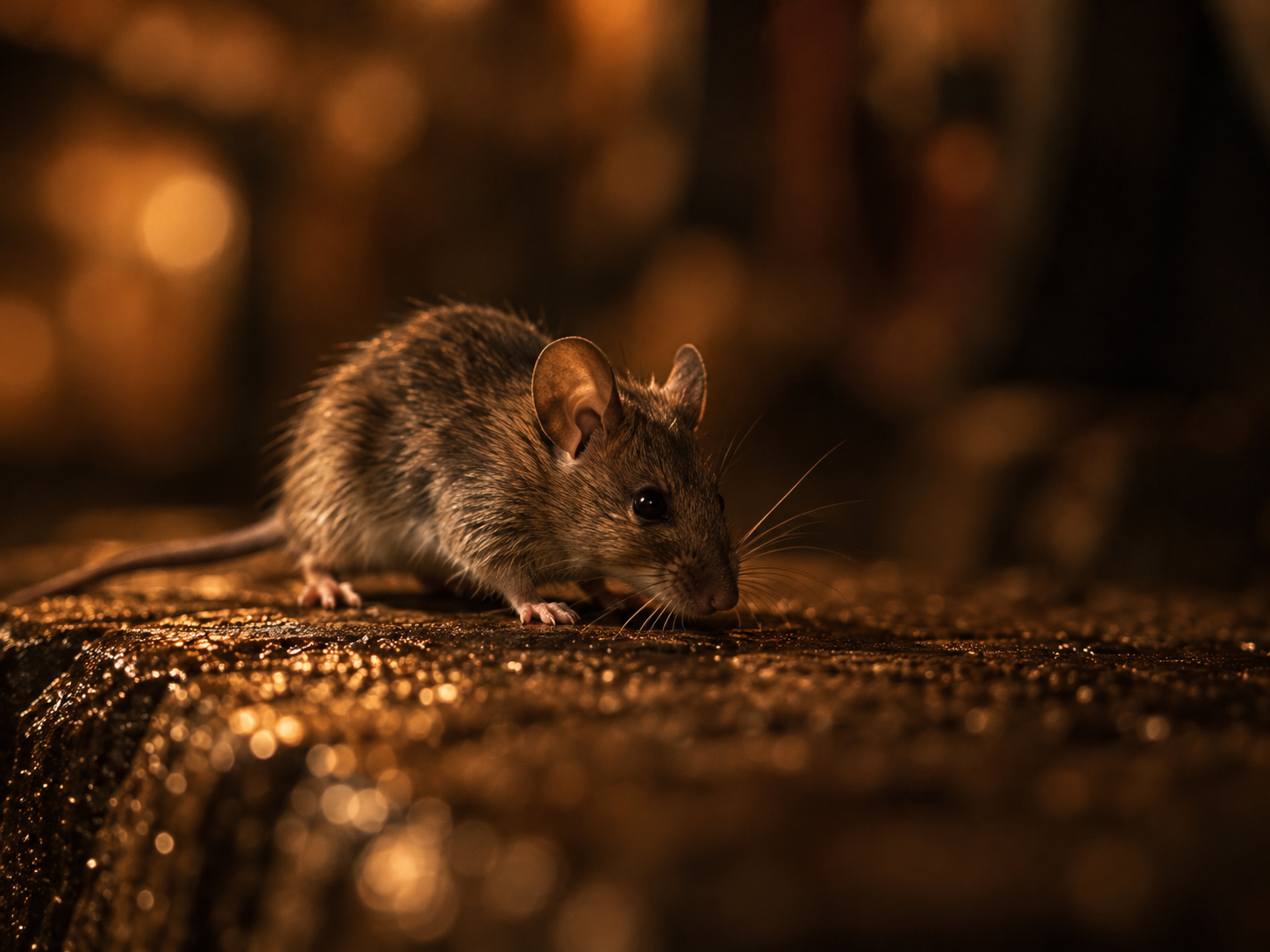
Some of the things we call wine faults have almost sweet names, and “mouse” is one of them. If you haven’t met it, you might picture something faintly animal, one of those quirky aroma terms wine has plenty of already. Once you’ve had a pronounced case in your mouth, you won’t confuse it again: an aftertaste of mouse cage, stale popcorn or crackers that simply won’t leave.
Punch magazine once called it natural wine’s biggest flaw, and no winemaker is happy to hear that. But anyone who knows mouse also knows that most of the time it isn’t a verdict on a wine, only a phase in its life. Not a pretty one, but one that passes.
What Do We Mean by Fault?
First, a word about the word. When a musician hits a wrong note, that’s a fault. When a carpenter is two centimeters off, so is that. With wine it is rarely so clear. Volatile acidity, for instance, is regulated by law: the EU limit is 18 milliequivalents per litre for white and rosé and 20 for red, roughly 1.1 and 1.2 grams of acetic acid. Yet every wine contains a little, and people perceive it very differently. What one taster finds disturbing, another calls lively. Where exactly does it become a fault? It only gets unambiguous with things that have nothing to do with the wine itself, like an old fiberglass tank leaching a plastic taste.
We use the word anyway, and we have used it for wines that someone else found wonderful. (Taste doesn’t translate neatly into limits.) What we mean by it these days is mostly this: one single trait drowns out everything else and the wine loses its many voices, like a musician playing so loudly you can no longer hear the orchestra. In that sense mouse is a fault for as long as it’s there. Just one that, in the vast majority of cases, goes away again.
What’s Actually Going On
A handful of nitrogen compounds are behind mouse, chiefly ATHP, ETHP and APY, two tetrahydropyridines and a pyrroline. Lactic acid bacteria form them, sometimes Brettanomyces too, from amino acids such as lysine and ornithine, with ethanol or acetaldehyde as partners. Oxygen favors the process, and so do a higher pH, warmth and little sulfur. That wines without added sulfur turn mousy more often than others is therefore no secret and no disgrace. It’s chemistry.
These compounds also have a quirk that makes them treacherous. At wine’s low pH they exist in a form that is barely volatile, so in the glass you often smell nothing at all. Only in the mouth does saliva raise the pH, the molecules become volatile and rise into the nose from behind. Because saliva differs from person to person, one taster gets the mouse clearly and another not at all. (At a shared table, this reliably leads to arguments.)
Why It Goes Away
The research isn’t finished, but there are good explanations. In model experiments ATHP oxidizes to 2-acetylpyridine within days, and researchers suspect this is one reason mouse fades over time. Brettanomyces also seems able to convert ATHP into ETHP, which is only noticeable at much higher concentrations. And some precursors sitting in the sealed bottle may never react to completion, or turn into something no longer volatile.
In practice we know the outcome well. A wine that is perfectly clean at bottling can turn mousy a few weeks later, and a mousy wine can be clean again a year or two on. Four months without improvement means nothing; anyone who gives up after that little time throws the wine out too early.
How We Handle It
A mousy wine isn’t a lost wine for us. In barrel it almost never happens, and when it does we wait until it’s gone before bottling. More often mouse shows up after bottling, and with some wines we now know fairly surely that it will. Those we bottle long in advance, with the waiting built into the plan, which is why a 2023 Pet-Nat of ours won’t go on sale until 2027. As long as a wine is mousy we won’t sell it, so it stays put until it’s through. That costs space and ties up money, and not one extra bottle comes of it. Selling a wine too early would cost us more anyway: not on the bank statement, but in trust in what’s inside the bottle.
There are two ways to get mouse wrong. One is to romanticize it as a sign of life you simply have to put up with. The other is to turn it into a trump card against natural wine, as if every bottle without sulfur were a risk best not taken at all. Neither is right. Mouse is a known and by now fairly well described phenomenon that occurs more often in wines without added sulfur and, in most cases, disappears on its own. Dealing with it is craft: taste, wait, taste again, and sell only once the wine is ready.
None of this has anything to do with romance. Chemistry and patience, yes.