How Much Are You Allowed to Dictate to a Wine?
We intervene, constantly. The only question is how much of the result we decide in advance.
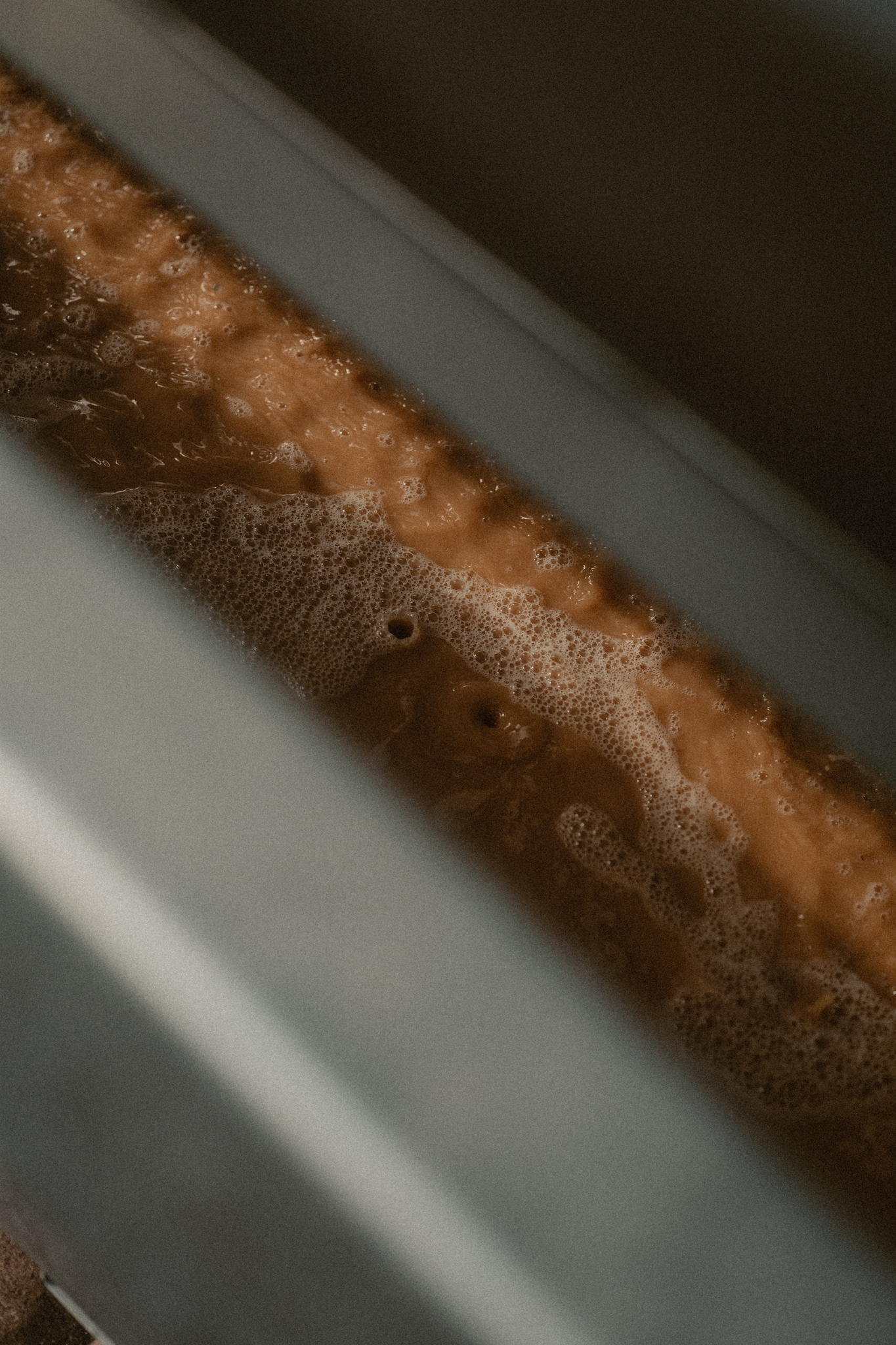
Natural wine has a problem with its own name. The word implies an opposition that doesn’t exist: nature here, humans there. Vines are planted, pruned and tended, grapes picked, pressed or fermented on the skins, and eventually filled into a vessel. Anyone who does nothing after that has already done a great deal. Nature is no seal of quality either. Gray rot is natural too, and no winemaker has ever mistaken it for a mark of distinction.
The more interesting question starts somewhere else: how much are you allowed to dictate to a wine?
We Intervene. Constantly.
Sometimes the debate is staged as if natural winemakers did nothing on one side while colleagues sensibly intervened on the other. That’s nonsense, at least in our case. We decide on picking date, yield, cover crop, destemming, time on the skins, pressing time and vessel. We measure temperatures, taste barrels and settle when to bottle. Natural wine is no way of opting out of responsibility.
The difference lies in what an intervention is meant to achieve. Conventional wine is a child of the revolution in agriculture and food technology: cultured yeast, filtration, sulfur, procedures that shift alcohol, acidity, color or structure. These are tools, often excellent ones in a functional sense. We find very few of them beautiful. Each answers a question before the wine has asked it. The yeast makes sure fermentation finishes and, roughly, how it sounds. The sulfur holds back what would otherwise develop. The filter removes what might change.
Anyone who can do everything eventually stops asking whether they’re allowed to.
What Safety Costs
The strongest argument for all of this isn’t stupid: if you want reliability, you secure it. True. We simply want it less than people assume, and we pay for that. A 2023 Pet-Nat won’t be released until 2027, because we give it the time to shake off the mouse. That’s one of the prices of going without sulfur, and we consider it fair. If you want possibilities, you have to give up certainties.
The idea that a winemaker only has to preserve what already sits finished in the grape is a fairy tale anyway. Many aroma compounds only arise from the interplay of grape, microorganisms and fermentation, or only become perceptible through it, and time, temperature, oxygen and vessel shape the course. What we later call wine was never entirely in the berry. A recipe certainly can’t anticipate that. This year was the driest since records began. Anyone working by the textbook expects little acidity in such a year and plans accordingly. Our Riesling came in at 9.2 grams per litre.
Dictate or Listen
With conventional wine, it can come down almost entirely to dictating. You set the target profile, from acidity to aroma, and steer the wine toward it: with the right yeast, the right enzyme, a corrective step wherever it strays. The wine carries out what was planned.
We do some of that too. Picking date, blend and the moment of bottling are decisions we dictate, and they’re worth dictating. But in between lies the longest stretch of time in the cellar, and we spend most of it listening, if you want to call it that: tasting, waiting, tasting again, watching what the fermentation does, and only then deciding. Anyone who only dictates ends up with an echo. We’d rather be contradicted now and then.
Listening doesn’t mean approving of everything. Some answers a wine gives we don’t like, and sometimes, after a long wait, the verdict is: we’re not bottling that one the way it is. That’s a decision as well, just one that comes after listening, not before.
How much, then, are you allowed to dictate to a wine? We don’t know exactly. We only know that “everything that’s possible” is the wrong answer. If you deliberately forgo corrections, you give up part of the control and are still responsible for the result. Less control therefore doesn’t mean less work, but more attention.
Sometimes you have to act. Sometimes you have to wait. And sometimes you only realize afterward that both were wrong.